“The music scene sucks, sure. But it always has sucked. I want to make records and tour. That’s it. I don’t need anyone to wipe my ass. I just do music just because it’s easy for me to breathe
After overcoming the confusing experimental album “Acme,” how did JSBX create an album that you can dance to, sing along to, and laugh with?
The explosive, life-saving rock ‘n’ roll party “Blastic Fang” unleashes with the greatest leaping power ever!
The album begins with “SWEET N SOUR,” a transformation that begins with a light guitar cut followed by a powerful snare drum and a roaring guitar. At times, the direction of the mind and body becomes one huge torrent, breaking through the sense of stagnation and bursting into unprecedented pleasure. This is followed by “SHE SAID,” a song for singing along hand in hand under a clear sky. It could even be called JSBX’s first anthem! John’s catchy, clear scream echoes over the powerful rhythm. It’s a roar of determination, transcending sadness and loneliness. Here, the latest JSBX is belting out loud under the dazzling sun. Their latest release, “Plastic Fang,” reveals the three members’ glamorous figures, rolling vibrant rock tunes with irresistible smiles.
As the form of expression known as rock and roll has worn away over the years, Jon has consciously “deconstructed” and “reconstructed” rock and roll from the days of New York underground leader Pussy Galore to the present. However, at some point, this logic reached a dead end. This was the case with his previous album, “Acme,” which was produced with a team of renowned producers. Destroying and renewing rock and roll out of a love for it. A proposition that could be considered a kind of self-contradiction.
In contrast, the methodology they adopted for this album was to go all out with blind romanticism and write songs as old-fashioned “pop songs.” They hired Steve Jordan, a leading figure who has worked with Keith Richards and others. By cultivating, extracting, and shaping the essence that JSBX had acquired up to that point, a more supple and solid funkiness was born, and the pleasure quotient increased explosively. After a long struggle, they finally achieved the primal impulse, excitement, and joy of rock ‘n’ roll. Just thinking about it makes my heart beat faster. We spoke to Jon (slightly under the weather) after he returned with his bright new album.
And not just for the band, but for me personally, as a singer and lyricist, I feel like we’ve reached new heights. Also, even though we tried new things, we didn’t lose that element of blues explosion that we’ve always had. I’m really proud that we didn’t lose even a minute of it. I think we’ve shown that even with such old-fashioned, conservative methods, we can still create such great works. And to start with, this is the first time since the band started that we’ve had the opportunity to work with one producer from start to finish on an album. Anyway, recording with our producer, Steve Jordan, was a ton of fun, too~~~~~ (big yawn)
Thank you very much. I listened to your new album, “Plastic Fang.” From the first track, “SWEET N SOUR,” it’s a truly refreshing and feel-good masterpiece that perfectly embodies the experimental spirit and overflowing love for rock and roll that JS BX has cultivated. “(Looking very happy) Oh, thank you.”
I think it’s a masterpiece album. How do you feel now that it’s finished? “I feel like I’ve made a really great album, and I’m very satisfied with how it’s been completed. I think this album shows the band’s great growth.
(laughs) Sorry, it’s so early in the morning. By the way, what was the reason that Steve was so good? “Actually, before I made him my producer, the song itself was already finished, and it wasn’t the type of song that I wanted to chop up or reconstruct. I also thought that the band’s sound itself was in top form, and I wanted him to finish it with the best sound, so I decided to ask him. Of course, before deciding on Steve, we all thought about what other producers there were. On the other hand, I was looking for someone who was more modern or more electric.
Electronic producers were also on the list of candidates…cough cough cough cough… Anyway, the reason we decided on Steve is because, in terms of sound, we were expecting him to create a mainstream sound. Although I can’t think of the reason right now.
I see. Well then, I’ll take my time and ask.
But first, when did this simple and direct idea of ”playing rock ‘n’ roll in a more straightforward way” come about? When you performed live in Japan last year, I thought the overall tone was bluesy. “What Steve kept saying while making this album was, ‘I want to make this album one that people will want to listen to over and over again.’ So on this album, the feedback, screams, and all those crazy noises were made a little smoother than usual. This time, the songs that were made have a strong tendency, but I think Steve brought that out in a more emphasized way, and his tastes were reflected heavily in the recording. That’s how we created this smooth and groovy album. It’s true that when we performed live in Japan, the overall tone was bluesy, wild, and messy, but the finished product was basically
The song remained the same.
The sound on this album is very accessible. I think rock bands’ awareness of the quality of their sound has changed dramatically over the past few years. Would you say that you’ve been influenced by that? It’s not a good example, but Radiohead’s recent albums, for example, clearly show a change in awareness of sound quality.
“I’ve never heard of Radiohead, I don’t even want to listen to them, so I don’t really know what their sound is like, and in fact, no one in our band has listened to their albums. Oh, if I had to pick one, maybe Russell does (laughs). As for the intricate sound production, it’s simply because Judah was into meticulous attention to sound, recording techniques, and that kind of sound production. I also think that hiring Steve was partly because we were sensitive to that kind of sound production. But it was an instinctive decision, well, it was definitely a decision. We all listened to a lot of different genres of music, but Radiohead was the only band we didn’t listen to (laughs).
(lol) Are you still going to say it…?
“(Laughs) And it was important to create a sound that was powerful yet retained the rough and brooding feel that is unique to the Blues Explosion. Furthermore, I was aiming to create a sound that would reach as many people as possible, that would elicit some kind of reaction from anyone. To put it in extreme terms, I wanted to create an album that even kids and grandmas could listen to and feel something from. I wanted to make an album that would give you that feeling.”
So, what was your motivation for wanting to create that kind of sound this time? “I think bands like ours have been around for quite a while before you realize it. We still believe wholeheartedly in what we’ve done as a band and in our music, and we believe we can create an impeccable album.
And if you want to be taken seriously, there are certain rules that you have to abide by, to a certain extent.”
So, what were some of the songs that you listened to a lot during the recording of this album and that influenced it?
Are there any works like that?
“No, I think this album was influenced by it. I don’t have any specific works in mind. Rather, I don’t care about things like my own emotional strength.”
That’s important, especially Radiohead’s sound.
(laughs) You’re still holding on to it.
In an interview, you said, “I don’t understand when people say my music is gamey or cool,” and you were confused that “people don’t try to accept it on an emotional level.” With this album, did you have any conflicts or anguish over the critical or cool aspects of your music?
(Long silence)…I honestly don’t know.
…But perhaps, the previous albums
I mean, I was involved in almost every step of the album’s production, from start to finish. That’s why I think I was very critical of my own music and had some insecurities. But now that I’ve hired a producer, I feel like it’s not my job, it’s his. Thanks to that, I was able to think more about my performance and get more in touch with my emotions. So with this music, I had time to think more deeply about the story I want to tell. I realized that my job is performance, to sing, to play songs, and to turn my thoughts and emotions into songs that can communicate with many people.”
So what emotions, sounds and images did you most want to express with this album?
Even though they’re fangs, they’re made of plastic, so I feel like they symbolize fragility. “That’s nice, too. Fragile.”
“Of course it was important that it was an enjoyable song, but for me it was even more important to portray sadness and anger… For example, *MONEY ROCK N ROLL, SHAKIN’ ROCK N ROLL TONIGHT. These songs are certainly fun to listen to, and at first glance they sound like they’re saying, ‘Rock is the best!’ But what I think is important about these songs is the sadness they contain (laughs embarrassedly). It’s those emotions that I feel, that was the most important part.”
What I found interesting was that it was a powerful album, but what about the title “Plastic (fake) Fang”
Why did you make it out of plastic?
It was a powerful album, but what about the only criticism I have?
“This album is about a certain sense of fear. I sang a lot of songs, and I tried to write a lot of stories about my thoughts on monsters, sadness, and things like that. The rock music I like is similar in many ways, and I’m attracted to the fantasy that’s in rock music, or the fantasy that’s in rock music.
It has a fantastical creature aspect to it. For example, I think Elvis Presley is like that. He’s a monster, but he’s also fake (laughs). It’s true, “Plastic” might have been the only part of this album that expressed my insecurities. Actually, I was originally going to make the title “MONSTER TEETH”. But “Plastic” just felt right to me (laughs). That’s because when you say “plastic”, the word “fake”, or in other words, “not real” comes to mind. But this album is the complete opposite. I think it’s very real in the way it tells the stories it needs to tell seriously and depicts emotions. So it’s a really good album.
Sorry, sorry. And, “Orgasm.”
(Laughs) Sorry. So, “Acme” was an attempt to reconstruct and reinvent JSBX as an “alternative” band that had updated its sound innovations and breathed new life into the blues. At the same time, I think it was a method that was reached after much struggle and difficulty, as JSBX’s expression itself had reached a dead end. What kind of album do you think “Acme” was for you now?
I think it was an attempt to fulfill a desire to destroy everything that Bludgeon had achieved up to that point.”
I think that’s a question I’d like to think about.”
…I’m going to admit it quite frankly, but is that really how you feel about “orgasm” right now?
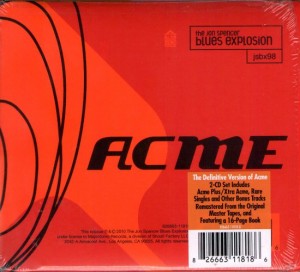
So, this might be a bit of a tough question, but let me ask you about your previous album, “Acme.” “Acme” was produced by Dan Nakamura, Alec Empire, and Steve Albini — all well-known and cutting-edge people at the time.
(Interrupting) Also, this album isn’t just about sadness, it also contains a lot of songs about anger. That’s something I’ve always been interested in. So I think that’s reflected not only in the style of music, but also in the way I sing. So the meaning I put into the title “Plastic Fang” is something like the anger towards anger that has no outlet, which is what this whole album has. In other words, it’s like being ready to fight even though there’s no enemy, and you have that kind of uncomfortable feeling, and you can’t help but take it out somewhere. I think the title reflects that as well (laughs).
“No way! I want to put myself in your shoes and say it like that.
I just tried it. Honestly, I don’t know.”
(laughs) I’d like to ask you about your state of mind when you started working on “Acme.”
“…I can’t remember. But I think it was a very confusing record. I mean, Acme was a very confusing record, don’t you think? It was an album with so many people involved. It was a bit chaotic, too. But I think it’s a really good record.”
So, did you ever have any worries or conflicts? In fact, you once told your producer in a magazine interview that you weren’t satisfied…
“When you work with that many people, there are bound to be some people that you just don’t enjoy working with. It’s difficult, and it’s not fun. I guess we just didn’t get along. There were some nice people among them, but I can’t say I liked everyone.”
When “Acme” was released, this period also coincided with the end of alternative music. Artists were stagnating and rediscovering their own expression and searching for new methods. For example, what did you think of the work of Beck and the Beastie Boys, who released albums around the same time?
“…I don’t know… Anyway, for me, alternative music ended a long time ago, that kind of music is just a stooge for companies. The term “alternative” is just a marketing strategy term (laughs). Generally speaking, “alternative” is not a mainstream genre at all. I think it’s about alternatives, not alternatives or anything.”
For example, there was the symbolic event of the breakup of Smashing Pumpkins. What do you think of the current state of the scene? “When we talk about the scene, for example, we’ve been in this scene for 10 years, so we’ve been in it for a while.
That’s why the bands at the center of the scene are so much younger than us (laughs). So, I think we’re in a very important transitional period as a band now. We can’t just be young, crazy kids anymore. But…
That’s why I think we can create exciting and powerful music. I think it’s time to redo it.”
I see. So that’s regardless of whether the scene is stagnant or not? In that kind of stagnant scene, do you feel like you’re
I don’t really think about what I should do.
“I think it’s all about making good music. When I was in high school, the music out there was really terrible. There was no scene that I thought was cool. So I had no contact with the scene from the beginning, and the only way left for me was to go underground.
The music itself was all underground, it was all non-standard stuff. I just keep doing what I wanted to do then and always have. So I’m really grateful that there are people who want to listen to my music, which was born that way.” However, if you follow your current logic, you would be releasing an album with a very underground feel, but this album is actually the opposite, an album that erases that underground feel, isn’t it? What do you think came from your feelings?
“This album is polished at first glance, easy to listen to, easy, it’s a very classic rock and roll record. There’s nothing underground about it, as you say. But when I say underground, I mean more on the spiritual side, and we made this album the way we wanted to make it. That’s the important thing. We paid for the record ourselves.
And someone made an album like this. No one told us to write a song like this, or that the chorus wasn’t right, or to edit it like this. We followed our dreams, and that’s what’s important. I might be alone in my vacuum tubes or in my bubble, but, you know, if a major label had approached me this time, I wouldn’t have said no. To take it to the extreme, if they’d said, “You guys are amazing. We’ll sign you for $10,000. We’ll make you rich and famous,” I’d be happy to sign them, as long as we could keep doing what we’ve always done, without having to change our hair or put on monkey suits. There are girls who come to see us like that, but we’re still signed to Matador. No major label was going to let us do what we wanted. I just want to keep working, making records, touring. That’s it. I don’t need anyone to pamper me, and I don’t need anyone to wipe my ass.
The music scene is definitely the worst. But that was always the worst.”
Do you think that this is a “new struggle as a band?” “Of course I think so. I think that up until now we’ve been a band that has made albums by just continuing to run. But with this album, for the first time we learned to put our feet on the ground. That’s how we were able to make this album. I don’t know why, and it’s not like we came up with this plan and got to this point. It’s just that before we knew it, it had become that kind of album. But this kind of album is something that we
I think it was a completely new frontier for him.” You said earlier that you wanted to make something that everyone from children to grandmothers could listen to, but why do you think you began to seek such strong connections with so many people? I think there are an increasing number of artists today who are strongly seeking that kind of deep communication aspect in their music. For example, U2 and the Chemical Brothers have both spoken about the power of music in this way. What do you think about them? “I’m not as grown up as them, so I don’t know much about the state of the world.
I don’t think about it at all. I’m more selfish.
“I’m simply making music because it’s easier for me to breathe. I only sing reversal songs.” By the way, I’d like to ask, what do you think of bands like The Strokes? They’re also based in New York, but they’ve started making something completely different from the music that’s popular in the current music scene, and it seems like they might become major.
“It’s fine. It has nothing to do with me. I saw it on TV the other day and it was good…
…But their live shows are the worst kind of boring. I saw them at a live house, and later at a festival, and they were just awful (lol). Their rock lacks craziness, and it doesn’t feel out of the ordinary, and more than anything, it seems to lack the kind of obsession to break into new worlds. Maybe it’s because I’m a kid that I find it lacking. By the way, I listened to their album, and it was just full of shitty songs. And even though it’s shitty, it seems like they spent a lot of time and money making it. What I’m trying to say is…
…No, I’ll stop here (lol)”
My last question. So this is the start of a new chapter for JSBX.
Now that you’ve created a wonderful album that heralds the end of your career, will that change your approach to live performances? What kind of live performances do you think they will be? “I’ve just started thinking about it, and I’m still at the stage of wondering what will happen. We’ll start performing live soon, so I think we’ll find out. That said, the songs on this album are all songs that we’ve been playing live since our tour in the early 2000s, before we recorded them. But I think our live performances back then were influenced by “Acme” and the album before that, so now that this album is complete, I think our live performances will definitely be in the mode of this album.”
So, I’ll be waiting for you in Japan.
Please say a few words to the fans out there. “I think I’ll be going to Japan in June, and I’ve always had great experiences here, so I’m really looking forward to it.” Yeah. Thank you for today.
“thank you!””