“BIOraphy
JON SPENCER
INTERVIEW BY KOSTAS SEREMETIS
21世紀をクリエイトしている Infulentialなリーダー達のインタビュー INTERVIEW OF INFLUENTIAL LEADERS
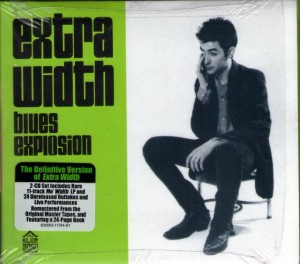
Jon Spencer is the lead singer of THE BLUES EXPLOSION. Yeah, that’s right, THE BLUES EXPLOSION…if you don’t know who they are, sounds to me you’ve been living under a rock or paying too much attention to pre-fabricated music. However, it’s never too late to find out.
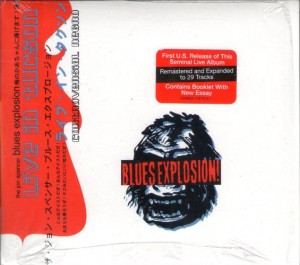
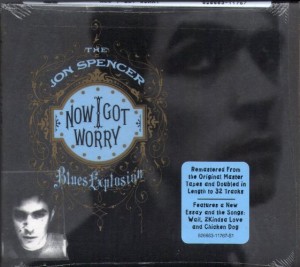
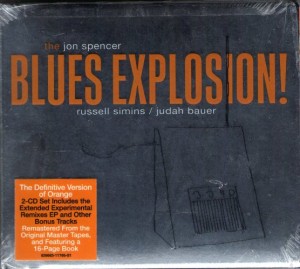
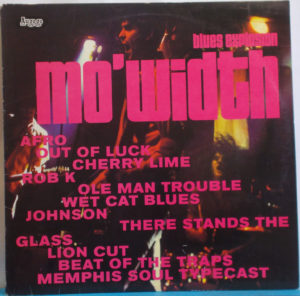
THE BLUES EXPLOSION (*recently, the name has been changed from The Jon Spencer Blues Explosion) are Russell Simmons on drums, Judah Bauer on guitar, Jon Spencer being the lead singer and guitarist, and together they create what to me is the epitome of a solid, rock ‘n’ roll band…but the not the type of rock ‘n’ roll band that have scarves on their microphones and tight leather pants (sorry, Steven Tyler…I refuse to ‘walk this way’). Let me say that it was unfair for me to interview only Jon because Russell and Judah are both amazing talents and equal contributors to the unit, but this is a magazine, not a book, so let’s continue, shall we…
I’ve seen THE BLUES EXPLOSION perform and raise the dead (many times); back in the days when art wasn’t payin’ the bills, I got hooked up with a ‘job’ selling t-shirts for them in concerts which, to tell you the truth, SUCKED, but I never held it against them. I’ve known these guys since ’96 and have never missed a New York show because they ROCK. This band has had a musical impact on acts like The White Stripes and The Yeah Yeah Yeahs. And may I add that all three members of the band are not only dedicated members of the Blues Explosion, but keep themselves deeply involved in music by maintaining a network of side band projects like Boss Hog, 20 Miles, and Butter 08. This band is open to a wide spectrum of sound collaborating with heads from Chuck D, Beck, Fred Schneider, Dan the Automator, DJ Shadow, The RZA (Wu-Tang), David Holmes, U.N.K.L.E., Moby, to the King Brothers.
Jon is a true New York Lower East Sider and I like to think of him as the Jim Jarmusch of rock and roll; a complex, intense, creative, compressed individual who expresses himself in the medium of music. I had the opportunity to sit outside in the park one afternoon with Jon himself who is currently in the middle of mastering his new album, “Damage”. Anyways, thank you Jon- I’m still a little con- fused about your process (someone should write a book on you, the band, etc…) but…read below!
– Kostas Seremetis
[Overview]
Kostas Seremetis (KS): Where are you originally from?
Jon Spencer (JS): Hanover, New Hampshire. KS: And you moved to New York when? JS: 1985.
KS: Why did you move to New York?
JS: I was really in love with a lot of the music that was coming out of New York City, and I was in love with the East Village; the whole idea of this really freaky, far-out kind of music and art scene. The transgressive art, culture, lifestyles, stuff like that.
I was really into Lydia Lunch, Richard Kern, Sonic Youth, Swans, not so much the real high brow arts but there was a lot of stuff going on, I fell in love with that.
KS: Did you go to art school?
JS: I went to Brown University in Providence for two years, and it was right next to RISD (Rhode Island School of Design) so I knew a lot of people there, but no, I didn’t go to art school. I went to Brown for about two years and then dropped out to play music and started Pussy Galore.
[Music]
KS: When did you first feel like you really connected with music?
JS: In high school. That’s when I started to form a heavy, really strong connection with music. It was a way of figuring out things or finding something out about my identity.
KS: Were you really into punk and rock ‘n’ roll?
JS: Where I grew up was out in a small New England town so…when I started listening to music the stuff I listened to was in 1981; my favorite bands were Devo, Kraftwerk, The Residents, I was really into bands that had strong images, like science fiction bands. Now I can see the rock ‘n’ roll in those groups, but at that time, on the surface they’re not really rock ‘n’ roll bands–they certainly didn’t have long hair, wear bell-bottom pants, or play electric guitar. So that’s what I was into, I wasn’t really hip on punk rock.
When I got to Providence where I went to school, I became aware of hard-core. Hard- core isn’t my favorite type of music but I did embrace that scene. And the thing that hard- core taught me was that anybody could do it, anybody can make a record; that was the punk for me, that was the power.
KS: How did you meet Judah and Russell?
JS: We met through this band called The Honeymoon Killers, a psycho-billy, dirge band, so we were all kind of playing in that group and that’s how we all met.
KS: You’ve got a rehearsal space on Avenue B. How long have you been in there?
JS: Since the late ’80s, probably ’88. There was a period of few years where I had to leave it because the landlord took it back from me and then he let me come back.
KS: Did you let other bands share the space?
JS: Not a ton, but Boss Hog was there, currently it’s White Hassle and Lo Hi (Hollis’ group) and Scott Jarvis’ band, I can’t remember their name. It’s never been that many people but we’ve had The Black Snakes, Railroad Jerk, Cop Shoot Cop. Not tons of people.
KS: It’s amazing that you guys are like a community of bands.
JS: I used to have much more sense of community; you look to your left and right and I’d be like, “Oh, there’s the Unsane, oh, there’s Railroad Jerk.” It’s funny because at the time I used to never think this was a tight knit com- munity, but here it is in 2004 and to look back on it I now see that there was much more of a community, a scene.
KS: Could you tell me a little bit about Boss Hog, the band you started with Christina Martinez?
JS: It’s always been music for me, working on it is enjoyable. And the worst thing about it is the social part of it, it’s not just something I do by myself.
Working on music involves other people, beyond just members of the band. If you’re playing in a concert, it involves all the people there, so it’s that social part of it that can be hard. I’ve never had a band where I put an ad in the [Village] Voice for a specific type of person.
So Boss Hog started as not only a group of friends hanging out, but Christina and I were interested in doing something musically together. The friendships were more important, it wasn’t so much about the success. Anything that I considered, I did it for the love of music. We called it quits a few years ago, and I think part of the reason is it became serious instead of it being easygoing, friendly hanging out.
KS: Where do your lyrics come from? Is it all sex-related?
JS: You could say it’s sex, I guess, because it’s rock ‘n’ roll, but it’s not all sex. The way we write is we get together and play, and I write the lyrics, because I sing the lyrics. Usually they just come out at the moment, a song will just happen. The best of times, the lyrics will be right there and they’ll come up from the deep. Not everything maybe, but the core of it. Then I’ll flesh it out later, polish it a bit…or not.
[Collaborations]
KS: You’ve worked with people like Dan the Automator, DJ Shadow, Beck….
JS: Beck was a big Pussy Galore fan. Beck invited the Blues Explosion to tour in Australia. I got him to sing on a Blues Explosion track (it’s on the “Orange” record) and after that, he came to New York to work on a whole session with Russell and I. He and I wrote all these songs that never got released. This was when Beck was working on “Odelay”.
KS: You’ve also worked with Fred Schneider. How did you meet him?
JS: I can’t remember, but he sang ‘Chicken Dog’ with us at a concert and my oldest sister was at the show, and it was the greatest thing ever to her. She likes the Blues Explosion but she got such a kick out of Fred Schneider.
KS: How do you feel about the remixes of your tracks compared to the original on
the albums?
JS: I definitely enjoy both. I don’t know if I would replace one or the other.
KS: Do you sometimes like one more than the other?
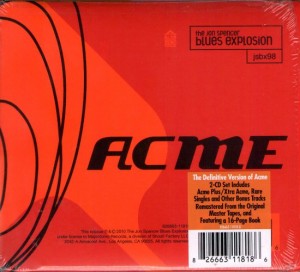
JS: Oh yeah. On “ACME”, one of the tracks on it was a remix that we had produced with Dan the Automator.
KS: Me, too. Me, too. Is there anybody you favorite spots in particular? wish to work with?
JS: Tony Joe White, who’s an American musician; he had a bunch of hit records in the late ’60s and early ’70s. He’s the king of “swamp rock.” He still plays. I’m a big fan of his.
KS: Did you open for James Brown?
JS: No, he opened for us, it was in Japan, and it was quite a shock. It was to play for Summer Sonic Festival, and we were headlining it, and he played before us. That was a trip.
KS: I understand you produced and contributed on an album for the King Brothers, one of my favorite bands from Japan. Could you tell us about it?
JS: The King Brothers was a crazy Japanese band, and I think they were into Blues Explosion as well as Pussy Galore. I think the first time I saw them was in Japan. They supported both Blues Explosion and Boss Hog.
The first show I saw was crazy; insane energy. totally spazzed out, some of their shows were really great. Then they got into the funky soul thing. They’re a really good band.
My friend Larry started a label called In The Red and put out some of their records in the United States. I produced an album for them with my friend Matt at his studio, which at the time was on Mott Street, a few years ago. They came over and recorded a lot of stuff and they just left it for me and Matt to do whatever we wanted to do with it, mix it.
One EP was released in Japan but then they broke up, and I think the plan was to release another EP, and then to put it together as an album in the United States. But the band broke up. They always played well.
[Changes]
KS: I see a transition in every record. When you complete a body of work, it sounds tight and sounds good together as an album should. What keeps you motivated? JS: I think that it feels good to do this, and that’s the main reason why I keep doing it. It is nice to be able to express ideas, thoughts and feelings, to work stuff out on a gut level, in a subconscious way, to get this stuff out of me.
I also really believe in music, rock ‘n’ roll, it’s like a church to me. I’m a grown man but I still want to keep making some noise, drawing attention and putting stuff out there for people to approve. There are a lot of different reasons, it’s complicated. It is different for me now than five or twenty years ago. I’m aware of that but I think that’s natural. I’m getting older and things change.
KS: Change is difficult.
JS: Change can be difficult if you think about what it means to keep doing this if you’re no longer 22. What does it mean to get old as a rock ‘n’ roll musician? There are people who get better but those who don’t; the ones that get worse should just stop, because they’re embarrassing themselves. And there is a tremendous pressure in the culture, the myth, ‘you do it quickly and burn fast.’
Rock ‘n’ roll in this country is denigrated and looked down upon as an art form, which is a shame because it’s one of the few things that America has contributed to the world. It doesn’t get that much respect. It’s treated as dispos- able and I think it’s largely misunderstood.
KS: You’ve toured all over the world, any favorite spots in particular?
JS: Yeah, Australia is great, I’m very fond of Japan, there are so many favorite places. I consider myself very lucky to have been able to travel so much with the band.
This summer we’re going to Taiwan so that should be pretty crazy. The new places are always my favorites. Even if it was somewhere like South Dakota, if I’ve never played there, it could be anywhere in the world; it doesn’t have to be glamorous.
[The New Record]
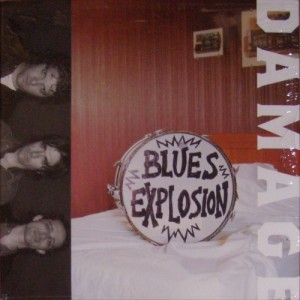
KS: I think you have a good sense of radar. Tell me about your new record “Damage”.
JS: I’m almost finished with it. Twelve songs, about 40 minutes. We grew up with vinyl records so we like to keep our records about that length. There might be some revisions that need to be made but it’s pretty much done. It’s taken some getting used to because we’ve been working on this for so long; about nine or ten months. We went to Russell’s studio and wrote and recorded everything, and from there we took a lot of songs and recordings.
The last six months have been pretty intense, pretty busy. And we’ve completed much more but we only used 12 songs. To get those 12 songs was so much work.
KS: Are there any tracks you want to release in particular?
JS: I’ve had ideas, there’s a song called “Hot Gossip.” Chuck D is doing vocals with me. I’ve had this very clear idea, a “Schoolhouse Rock” thing in that style. The idea hit me that it would be kind of cool.
KS: Do you have a bunch of guitars at home?
JS: A few. I’m not the biggest collector of instruments.
KS: Do you name them? Are there are any Lucille’s in your house?
JS: You’re gonna get into trouble with that kinda shit.
[The Tables Are Turned…]
KS: Do you have a favorite book right now?
JS: A book that I enjoyed very much recently is a book called The Corrections by Jonathan Franzen. Right now I’m reading a comic book, A Hundred Bullets. Did you grow up on comics? (Kostas nods)
I didn’t grow up on them, my brothers and sister’s didn’t read them so all the stuff I had were paperbacks of MAD Magazine, and those were around. But as far as comics it was never around but I was definitely interested in famous monsters but I was actually ashamed to buy them. It’s only been in the past few years that I’ve allowed myself to buy them. In the ’80s, I started reading Love and Rockets, Hate, Robert Crumb. I was into MAD Magazine when I was a kid cuz they were just around and the thing about those things is that some of the hanging out with you.¶ stuff as a kid, you wouldn’t understand it. What do you like to read?
KS: I like the classics, Marvel and DC comics, also a fan of independent comics such as Flaming Carrot and Gary Panter’s work. Stuff that’s just so out of wack, right now I’m into Frank Miller.
JS: You know they’re doing Sin City movie.
KS: Yeah, I know.
JS: Have you ever gotten into trouble for the imagery you’ve used?
KS: No. Now I’m in this transition stage where I’m not focusing on comics.
JS: What kind of stuff are you using?
KS: I’ll find out when I get there. I’m just trying to grow and open up my eyes a bit more.
JS: Were you ever interested in drawing comics?
KS: Never. I always wanted to make art; it made more sense to me, more important to me. It’s a smaller audience but it’s stronger.
JS: You’ve done quite well in Japan, is that sustained itself?
KS: I have a good Japanese following and I go back there often. My next show is in LA and then Australia. I’ve also been doing short films using DV (digital video). I think that one film that was in a museum show in Japan is now going to a festival in Berlin. I’m trying to open up my mind to more mediums opposed to just sticking to one thing.
JS: Do you work entirely on your own or do you have people who work as assistants?
KS: I have one intern and he helps me out like, twice a week, more office stuff, stuff that I don’t want to do, or computer work. It’s pretty cool; I’ve been staying more productive and have a really nice studio in Brooklyn and it’s close to home.
JS: So you don’t live in the studio?
KS: In many ways, yes, I’m always there.
JS: And you’re a fan of Warhol?
KS: Some sense, kinda. Yeah and no. I under- stand his work and appreciate it but I like other things now. He changed my life; he triggered things in my head.
JS: Have you been to the museum in Pittsburgh?
KS: No, I should. I’ve been wanting to take that road trip but life gets in the way. But I see his shows in the city up here when something comes available. I have a piece in my collection, which is kind of nice. I’m really feeling Rauschenberg at the moment.
JS: Did you study art history?
KS: No, just what I picked up from books and on my own. I never went to school. I finished high school and I took a year off to save money to go to college.
JS: And you’re still on that year off?
KS: Yes, I actually did save up enough money but I ended up working as an animator for TV commercials working for a company. I went to school for that for about two weeks and then quit because I was already getting paid and had experience but at the same time, I was making my own film and showing them in nightclubs in Boston. Just like, comic book, slap stick kind of humor, very visual. Then I started painting nightclubs and got into painting so I gave up animation, moved to New York, said goodbye to the family, packed my bags, came here with big hopes and dreams, and now I’m in the park hanging out with you.”