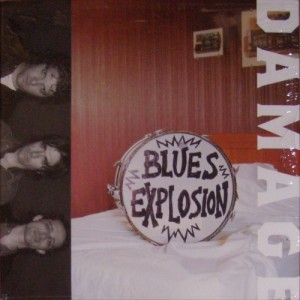
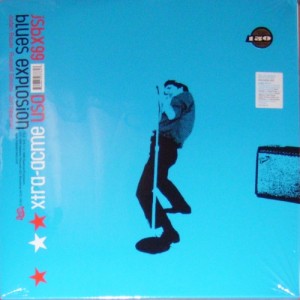
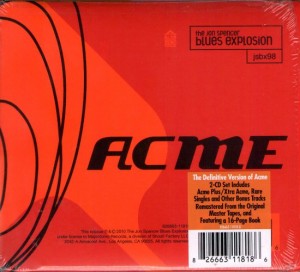
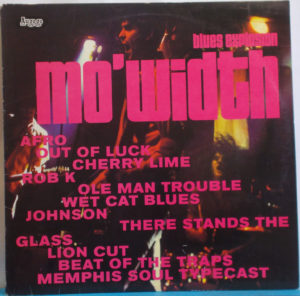
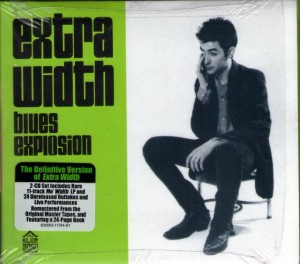
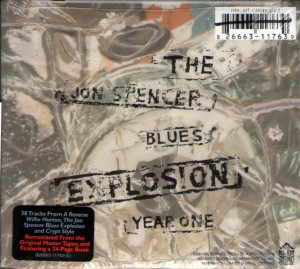
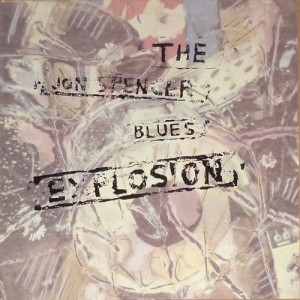
“Jon Spencer Blues Explosion has released their fifth album, “ACME,” which takes a different approach from their previous albums. A quiet, pale-blue flame, the group once again showcases a new style of rock, now funkier and more danceable. Their guitar sound is sharp, loud, and roaring. Incorporating punk, blues, and hip-hop, they continue to shake up music itself with their edge-of-your-seat sound, setting them apart from the average, half-baked rock. In an era where closing your eyes for a moment can easily lead you to lose sight of your purpose and goals, these wild children simply charge forward. Enter true rock ‘n’ roll heroes, Jon Spencer and Judah Bauer!
All of us, I wanted to do something new.
What direction were you aiming for with this album?
Jon Spencer (hereafter: JON): No, there wasn’t any particular musical direction. What we wanted to do was make a new album for the Jon Spencer Blues Explosion (hereafter: JSBX). We wanted a new sound, different from what we’d done before, but we didn’t know what that sound would be or what style it would be. So to achieve that, we recorded a lot of songs from a variety of producers and mixed them. It wasn’t until several months into the process that we chose the songs to include on the album, and it was only then that we had a clear picture of what the album would be like. So your specific intention was to make an album that was different from what you’d done before?
JON: Yes. I wanted to make a different album, a new album. That was the only idea.
How does “ACME” fit into JSBX’s previous albums?
JON: It’s a great album, so I’m very proud of it, and very happy with how it turned out. I think we accomplished something new, and it’s a new album for JSBX. That was important to us. You could say that was all we were aiming for. Making a good album is important. This is JSBX’s fifth album in seven years, and we all wanted to do something new.
One of the mixers/engineers you used was Steve Albini, who mixed Pussy Galore’s “Dial M for Motherfucker” and JSBX’s “The Jon Spencer Blues Explosion.” Was it different from before?
JON: No. Steve’s approach is very simple. He understands the sound, decides what microphones to use, and how to set them up.
It’s all about the choice of notes and their placement, not about adding effects to the sound. Unlike a lot of technical engineers and producers, he knows how to get the sound right. He doesn’t say, “Why don’t we take out this chorus and make this part longer? What if we add a trumpet here?” Steve is a really great engineer.
Is the use of automators intended to add rap and hip-hop elements?
JON: Yes. Rap has always been an influence on JSBX. The reason we wanted to work with Automator was because we loved Dr. Octagon (Automator’s band).
This time, eight mixers/engineers are involved.
JON: Probably more. There were a lot of songs we recorded/mixed, and some that didn’t make it. Some didn’t turn out the way we wanted, and some weren’t that great. There were some songs we loved, but didn’t make it because they didn’t fit the feel of the album. So, there were people who worked on songs that didn’t make it on the album, so there were more than eight.
How about doing it with that many people?
Was it?
JON: It was confusing at times. It was frustrating at times. There was so much going on all at once.
Are the guitars you used on the new album the same as before?
JON I use the same guitar.
JUDAH: I used a few Telecasters, but I used a new Telecaster. I also used a B-Bender (String Bender) guitar on “Magical Colors.” It’s a country-style guitar with ’60s pickups.
JON: You used a Strat too, right?
JUDAH: Yes, I used a Strat too. That’s surprising! My favorite is the Telecaster, but the Strat suited “Torture” better. I also used effects like phasers that I hadn’t used before.
I also used effectors.
What is the new Telecaster?
JUDAH: First, a ’51 Esquire. I like playing it in open G. Then there’s a ’67. This one has a much clearer sound.
What amps did you use?
JUDAH: I used a ’61 Fender Twin and a ’61 Fender Concert. I used two amps. This was the first time I’d used two, but I liked the sound, so I used them. I used them throughout the album. I also used a Silvertone. I used the phaser that was built into the amp, but it was a Music Man amp.
This is also my touring amp.
What amp did John use?
JON: As Judah said, we both used two amps on every song when we were recording. I used Steve Albini’s amp or one that he had. We would switch amps depending on the song to get different sounds. The amp I have is something called a CMI, an early ’70s hybrid tuner.
JUDAH Recorded in New York
Rock and roll is music that appeals to the body, it’s sex music.
I also used the equipment that was in the studio there. There were a lot of different amps.
JON: When mixing, I had a variety of sounds to choose from. Judah uses two amps, so he has two microphones set up. It’s the same for me, I have two amps with separate microphones so I can pick up each sound. That’s why I can create different feelings for each song. Even within the same song, I might use a different amp for the chorus, for example, to create a different sound during mixing.
It’s a solid-state amp from Steve, which I used on a lot of songs. After we recorded it, I found a crack in the speaker, which actually made the sound better. I also used a Traynor solid-state amp that Steve had. Steve also has a lot of small vintage tube amps, and if you turn them up really loud, you get a nice distortion effect. Small amps are fun to use, but it’s good to have at least one solid-state amp. It brings out different sounds and helps distinguish the sound from Judahs. I used distortion, but I didn’t use any pedals, just the distortion from the amp. No effects.
●John has always used the same guitar,
What are your requirements for a guitar?
JON The one that makes noise (smiles).
What kind of sound are you looking for in particular?
JON: No, I don’t really want anything in particular. I have a guitar here that I like. What do I like about it?
Why? Because it has a unique sound and loud, distorting pickups.
Do you think Judah’s playing has become more funk-influenced? Was that style of playing something you were conscious of?
JUDAH: No, I think it’s more Russell (Simmins, drums). I think playing with him gives it that swing. I also listen to a lot of blues and funk, so I think my rhythmic chops have probably improved too. But I think it’s mostly Russell’s influence.
John only has one guitar and no spare. What happens if you break it while touring?
JON: Then I just sing. And the guitar is the same.
I haven’t played it much. Especially with the new songs, I only play it at key moments, and if a string breaks, I can just play a song to fill in the gaps, so someone can just change the strings in the meantime. If I don’t have to fly within the US, I take a spare guitar with me, but when I go abroad, I have to take my theremin with me too, so I don’t take it with me.
The strings didn’t just break, they were gone.
Or what if the guitar breaks?
JON: That’s when I think about it. It’s like, “What if I slip in the shower and break my leg?” It’s not something to worry about too much.
The blues is our culture, I grew up with the blues, I’m American.
Next, please tell us about your musical background. What bands, mainly punk and blues, have had a major influence on you?
JON: For punk, it would be Link Wray compilations. I’m sure his first compilation was bootlegged, but I don’t know the title. It had a pink jacket, and it was the first Link Wray album I ever got. Then there’s “Fun House” by the Stooges, and “Confusion Is Sex” by Sonic Youth. “Back From the Grave Part 1” from a ’60s garage band compilation. I also like Black Flag, but I never wanted to play like Greg Ginn. Greg Ginn was amazing, though. For blues, there’s Elmore James, Hound Dog Taylor, the guitarist for Howlin’ Wolf…
Hubert Sumlin?
JON: That’s right. And then there’s R.L. Burnside.
JUDAH: I like the guitarist in Black Flag too, but I can’t play like him. There are some good local bands in Wisconsin too, like the Crucifax and Pussy Galore. In New York, Ornette Coleman is good. As for blues, John Lee Hooker’s “No Friend Around” is a good album. I also like Bob Dylan. I think his acoustic playing is blues. Who plays on “Morning in the Moonlight”?
Not Hubert Sumlin… I think it was Willie Johnson? And then Hound Dog Taylor.
JON: I like rockabilly, but Carl Perkins is great. I could never play like him. He’s just amazing. And the guy who plays with Johnny Cash, I think it was Luther Perkins. His guitar playing is so simple, but it’s ridiculously amazing.
Do you think the blues is an important element of JSBX, and what does the blues mean to you and Judahs?
JUDAH: I love the sound. It’s the best sound for me. I’ve been in a lot of bands, but blues is the best.
JON: I think blues is the root, the source, but there are a lot of blues that I don’t like. I like bank blues and other blues that are unique and personal.
It’s like his personality is really coming out. It’s like he’s a real individual. The blues is our culture, we grew up with it. We’re Americans.
In John’s case, from his days with Pussy Galore to the present, rock and roll has always been at the core of his music.
JON: Yes, but Pussy Galore was partly about the devastation, frustration and hatred of rock and roll. I think JSBX is about the love for music.
What do you think is the crucial difference between the music JSBX produces and other alternative music?
JON: JSBX’s music is crazy but also pure. It comes from the three of us.
In this article, we will analyze the artists and works mentioned by Jon and Judah in interviews to get closer to the roots of the Jon Spencer Blues Explosion guitar sound. Although what we have covered here is only a small part of the elements of their music, some of which are less well known to the general public, and so will provide some hints closer to the roots of their sound.
“ACME,” an explosion of John’s passionate blues-funk spirit, is an undeniable culmination of John Spencer’s expansive deconstruction and reconstruction. Even here, deep connections to his roots emerge, and any JSBX fantasies will be delighted if they’re kept in the loop. First, the 2000s Rage Band compilation “Back From the Grave Part.1” had a decisive influence on John’s musical outlook. Its quirky tuning and clattering mix of rockabilly, soul, and rock will be a delight for anyone familiar with John Spencer. Its unconventional rockabilly, a style that John likely influenced, is also present. Pussy Galore, whose three albums were recently released in Japan, are also worth checking out.
When it comes to black music, John and Judah mention Chicago bluesman Howlin’ Wolf. They particularly praise the guitarists who supported Wolf’s powerful, raspy voice, but of course, that’s due in part to Wolf’s presence. Still, as guitarists, they likely care about the sound of their guitars. The blues favorites shared by both John and Judah are those with a unique driving feel. The boogie style, brimming with originality through the work of John Lee Hooker and Hound Dog Taylor, is now highly regarded, but was once considered unorthodox, and its punkish elements likely resonate with John and others.
In the punk scene, the Stooges, who remain as influential as ever, have had a major influence, which is only natural when you consider the talent and character of Iggy Pop. It goes without saying that Sonic Youth has had a major influence on today’s John Lennons, not just in terms of music, but also in terms of their approach to their work and their involvement in the scene.
It’s stylish music from three members of a unique band. It’s crazy, but honest. It’s new music that incorporates many elements, but it’s also true to who they are. A lot of people these days forget that rock and roll is music that speaks to the body, sex music, but JSBX has that. They’re willing to go hard.
But did that not happen this time either?
Apparently there’s no set list for live performances.
JON No.
How did it feel performing the new songs live (October 9th, secret live at Shibuya Yaneura)?
JON: I think we played all the new songs yesterday. I wanted to focus on songs from the new album this time, and it’s fun to play the new songs. I’m still a little new to the new songs, so I’m trying to make them feel right, but yesterday wasn’t quite as good. I think I could have flowed the old and new songs more smoothly. But right now, the new songs are the most exciting, so I want everyone to hear them. The old songs we’re doing are crazier and faster. The new songs are a little quieter, soulful, mellower, and not as crazy. We’re finally getting to the point where we can play the new songs properly. They feel good when we’re playing them, and the speed is just right. As we get better, we’ll be able to break them down and say, “Just play this bit,” and that’ll be fun. That’s one of the things that makes JSBX unique: we can play songs back to back. JSBX songs usually get more intense, more crazy, and faster, but the new songs are a little different. So it’s a new world for me.
What direction does JSBX want to take in the future?
JON: No. I try not to think about it. I don’t have any plans, I don’t have any ideas. I just do it. We’ll be touring a lot after the album is released worldwide. Right now, our focus is on getting familiar with the new songs on stage and putting on the best show we can. We want to feel good performing and put on a good show.
Will you continue to use that guitar?
JON: Yeah, because I can play it.
JUDAH: He’s still playing the Telecaster. The Telecaster is a rockin’ guitar.
(I’m looking at this magazine) Is this the guitar that caught my eye?
Do you run?
JON: No, I found the mistake. Here it is (pointing to a photo of an artist’s rack of equipment). That’s too much. All you need is one guitar, one amp, and a cable.
JUDAH: I think just using a phaser pedal is decadence.
So from now on it’s going to be touring again?
JON: Yeah, I’m going home and resting for a week, then we’ll tour America, tour Europe, tour America again, tour America some more, then Japan and Australia. Live shows are very important to us. They’re the most fun. I think that’s why we’re in this band. We love performing live.”