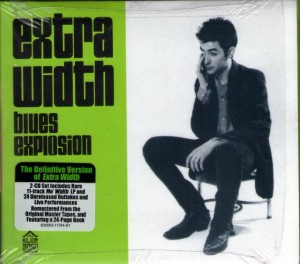
“THE JON SPENCER BLUES EXPLOSION
JON SPENGER interview
I’m a crazy rock n’ roller, I’ve got a kid, and I’m still – contradiction
At the end of the century, why does the god of rock and roll choose Jon Spencer and continue to bestow him with extraordinary power?
Today, I have prepared seven keywords to help you understand John Spencer more deeply. I will ask you a number of questions about each of these keywords.
The stage is where Jon Spencer burns out. He just wants to lose himself.
Yesterday’s (2/16) performance was one that gave the impression of a band with unity and even a certain precision. When they came to Japan in early autumn last year, I think they were charging ahead with unconventional power, occasionally showing cracks in the ensemble, but this was clearly different. “At that Yaneura (in Shibuya), the tour was still in full swing.
It can’t be helped, since we hadn’t even started yet. The songs from “Acme” weren’t yet polished enough for live performance, and we were tired from the promotional tour, so we didn’t have enough time to rehearse. Under such bad conditions, in a small venue like that, with the audience packed right in front of us, ‘Damn, dun, dun!’ (suddenly slams his fist on the table)! We had no choice but to go all out and go for it. Finally, we started touring in October… and things started to come together.”
You’ve been on a world tour since the end of last year, and now you’re on this stage. You’re performing mainly albums that were constructed like “ACME,” so has your view of “ACME” changed as you’ve performed it and come back to it over and over again?
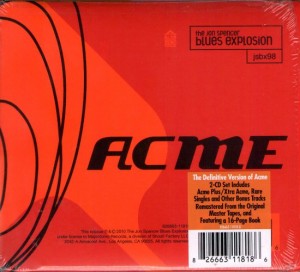
“Well, I guess you could say that things have changed. To begin with, I haven’t really listened to the album since we made it, and well, I happened to listen to a little bit the day before yesterday, but essentially I haven’t listened to it at all… That album was really difficult to produce. Up until then I’d been self-producing everything, but this time it was a collaborative effort, so it took an incredibly long time. So many different producers and musicians came into the studio one after another, and it wasn’t much fun during the production. I had no idea what the future of the band was going to be like.
Do you think the quality of your performances has changed as you’ve performed on more stages?
“I think it was gradually developed. I learned a lot from James Brown’s shows. Yes, when it comes to entertainment, JB is the one.
…Yes, showmanship was something I learned later. I think it was achieved as a result of a single-minded belief and sincere effort to make the show a success. When I first started, I was just wildly unrestrained and crazy. In a way, it was an escape. Even now, I still do music to escape from certain things, but–”
I was feeling positive… Now that we’ve gone through all this trouble, I’ve started to think that maybe we can actually do more, that we’re actually a band that can do anything. We have a bigger capacity than I thought, and maybe we can make different types of records.”
I see. So what exactly is it that you are pursuing on stage right now?
“I just want to lose myself. I want to throw away all reason and get lost in the waves of music and the vortex of performance. What I’m really looking forward to, deep down, is that moment when I can forget myself. But I also want to make the live show fun to watch and the best it can be. I want the audience to enjoy it too.”
Has the mindset of “letting the audience have fun” always been a consistent one?
“I’ve been performing on stage for a long time now, so it’s hard to remember when I first started… But from the beginning, I was very conscious of the importance of entertainment and showmanship. Umm, you know, our old shows… how about those sound shows…? (He holds his head in his hands, thinking frantically)… No, I don’t think we’ve changed much since the beginning. We’ve always valued showmanship,
I’ve always loved being on stage.” When did you start to feel that you were able to demonstrate showmanship and convey it to the audience?
“Well, now I’m basically trying to balance the showmanship with getting my own satisfaction from being involved in it. I want to have everything balanced, like a Las Vegas extravaganza entertainer. But I also sing about my feelings, my wife and my family. So… I don’t know if “artistic” is the right word, but…
“Well, I want to perfect the technical aspects, but also create a show that has real soul and emotion.”
Jon Spencer, A Wandering Life
The Beginning: “Blues” All the bluesmen I met were like Martians
When you hear the word “blues,” what do you think of?
“First of all, I want to say that while the blues is in our band name and we are influenced by it, what we do is rock ‘n’ roll. The blues should be at the root of all music.”
Well, that’s true, but I’d like to ask you what it is about the blues musical form that attracts you.
“I like the crazy stuff. I’m drawn to unique composers who have a unique style that you can tell who’s who just by listening to it. Like R.L. Burnside, Elmore James, Howlin’ Wolf, Hound Dog Taylor. It’s not the format or the musical style that’s important to me, it’s the performer themselves. The reason I got into blues in the first place is because the songs were so far removed from me, it was like music made by an alien. I’m white, and I grew up in the northern part of America, in the mountains (wry smile)… So, later on, I started to get into R.L. Burnside, and I started to get into blues.
I made a record with Burnside and realized that he and his bandmates were, to me, like, Martians, hehe. We got along well right away and it was a lot of fun working together, but they were just completely different people.
It was a seed.”
He said he was shocked by the foreign culture. “Well, it wasn’t enough to make me sick, but… how can I put it,
I was definitely inspired by it.” I see. So what was the trigger that made you start incorporating blues into your own music?
“Before the Blues Explosion, I was in Pussy Galore, a band that started under the influence of Garage Bank in the 1960s. Garage Bank is based on rhythm and blues. The Stones, the Kinks, and the Yardbirds were copying Muddy Waters and Chuck Berry. Blues has always been present in the music I listen to. It goes all the way back to the source, like Muddy Waters and Howlin’ Wolf.
We didn’t meet and start listening to him until much later, but when the three of us got together in the early days of the Blues Explosion, we all talked about how great Hound Dog Taylor was. Not that we were all crazy about him, but we all gradually started to get into him.”
I think there are two kinds of blues. One is the violent side, represented by rough guitars, and the other is the sadness and songfulness. From what I can see, the Blues Explosion seems to be drawn to the former, but I’m not sure if that’s true.
“Yeah, I guess that’s fine. When I first got into the blues, that wild side of it really appealed to me. Like Hound Dog Taylor.”
On the other hand, I think that in “Acme” you can hear a more straightforward blues sadness.
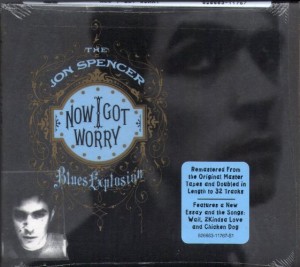
“Well, ‘Acme’ wasn’t as violent as the previous album, so maybe you could say that. But in my opinion, ‘Acme’ is a less bluesy album. If you compare ‘Now I Got Worry’ and ‘Acme’, I think the older one was definitely more bluesy. It’s a work that’s heavily influenced by R.L. Burnside and others.”
The reason why this happened is because the Blues Explosion was playing blues.
I think it comes from the fact that we’re not a band that plays blues. I admit that we’re influenced by the blues, but this band, at least to me, is a rock ‘n’ roll band. The reason I like the blues is because it was so foreign to me.”
Jon Spencer’s special move “Kita”
“When I was 20”
Even now I don’t know how to play
When did you first pick up the guitar?
What time are you talking about?
It was quite late.
“Well, it was a garage band, so it didn’t matter if you didn’t know how to play. Even now, I don’t know how to play (laughs). But, you know, you can make sounds… with all this skill,
When I compose songs, I always play around with the guitar.
“That’s cool. So, what’s the coolest one?
Who is your favorite guitarist?
“I’ve always liked Link Wray.
“Ron Asheton of the Stooges. Blixa Bargeld of Neubauten – the guy who played with Nick Cave. Anyway, they were guys who were active a long time ago, in the early ’80s, so it’s not about the guitar tech or anything like that. What was important was what kind of noise they were making… and it was the same with Sonic Youth. It was an era when the idea was that guitar was cool, no matter what kind of noise it was, as long as it was loud. And in the garage bank era of the ’60s, there were a ton of unknown, eccentric guitarists, dozens of them. I don’t even know the names of the guitarists in the bands from that time, but what I like is that kind of simple guitar.
The feeling you want to express with your guitar
What do you think “emotion” ultimately means? “Well, the sound of the guitar is… a kind of power, a kind of aggressiveness.
I think it’s crazy, insane, and has an extraordinary power.”
Are you running?
“No, the three of us just got together and did whatever we wanted… I played guitar and sang, and Judah played guitar, and we formed a group.”
“I don’t do it much. Especially now that I’m a dad. You know that, right? I’m always busy with this and that at home. I’m not the type to practice hard at home anyway… well, maybe I’m just lazy at heart, hehehe.”
“NY,” the place where Jon Spencer spent his youth, has already changed my NY.
You currently live in New York, but when did you move here?
“About 14 years ago. I dropped out of college, formed Pussy Galore in Washington, DC, and then came to New York about six months later.”
What does New York mean to you?
“…But New York has changed too.
When I first came out, I was in love with the East Village music and art scene, but it doesn’t exist anymore. It’s extinct. Back then, there were bands like Swans and Sonic Youth, and it was an exciting city where you never knew what was going to happen. That’s why I dreamed of living in New York one day and being part of the scene. But now, the scene is nothing more than nostalgia for a time long gone. New York is now seen as a clean and safe city, and Times Square was destroyed by Walt Disney. The atmosphere of that city and what it symbolized have completely changed. And now that I’m a father and have a family… my expectations of my living environment are different from what they were back then…”
The music scene has disappeared, but bands like Sonic Youth are still active.
Isn’t it?
“Yeah, but it’s a completely different band than it was before.
I’m still active, but it feels like the past.
Even if I did, I wouldn’t perform at the clubs I was playing at the time,
I don’t play in small clubs.
Jon Spencer, the smell of “dandyism” emanating from his leather jacket. I have always thought that rock and roll dandyism is beautiful.
Musical tastes have changed too. …The East Village apartments where poor musicians used to live now cost thousands of dollars in rent, and now the rent is thousands of dollars. The galleries are gone, and there are no incidents or events happening. The crazyness that was in the scene back then has completely disappeared. …Of course, I’ve gotten older too (sorry)
Do you ever play the guitar by yourself at home?
What exactly did the music scene look like in the ’80s? Were there any connections between artists?
“Well, basically, by the time I moved to New York in 1950, the light was already starting to go out. When I was in college, I would read up on information about New York City in magazines and newspapers, and I dreamed of living in such a cool place and being part of the scene… But now when I think back on it, I think it was probably the extremely extreme and radical lifestyle. At least that’s what I think now. The music was full of extremism, aggression and violence, and the way the people in the scene lived their lives had a certain danger, a fearlessness and intensity to it.
It looked beautiful and attractive to me.”
So, on the other hand, does that mean that there are no bands in New York that you feel any sympathy for right now?
“Well, there are bands I like. Railroad Jerk, White White Hustle, a band called Gunga Din, etc. I still like Sonic Youth as a band.
So it’s not that I’ve grown tired of New York…
The Explosion never belonged to any scene. Well, Pussy Galore said, “Yeah, that art scene vibe is just a thing of the past. And generally, blues
That’s what made me want to play the guitar.
It was part of a kind of scene. It wasn’t just New York, it was national. Yeah, that’s about it.”
I think dandyism is an important element in rock and roll, and I think everyone will agree that your music has a unique masculinity to it. Are you particularly conscious of being a “man”?
(laughs)
“By ‘dandy,’ do you mean dressing up or fashion? Well, I guess that’s something that’s acquired over time. Nowadays, we pay a lot of attention to our clothes (laughs).”
Hahaha. So, spiritually, do you try to project masculinity into your music?
Do you have it?
“Hmm! (thinking)… Well, you could say that.
I think so. I’ve always loved Little Richard and Jerry Lee Lewis. Iggy Pop, too. There’s a certain dandyism to these guys, you know? As a character. I think one of the functions of rock and roll is that it allows you to create new characters. I’ve always thought that that aspect was beautiful. It’s fascinating to be able to transform into someone other than yourself.”
I see. It’s an interesting way of looking at dandyism as “transformation.”
“So, to avoid any misunderstanding, the Blues Explosion is certainly crazy rock ‘n’ roll, but I have no intention of advocating or defending male chauvinism. I’m also attracted to the non-sexual aspect of the rock ‘n’ roll format, the fact that it can transcend gender differences. Little Richard and Mick Jagger also sold their feminine side, and I think the Blues Explosion could have that side too. It’s not a macho thing. Rock ‘n’ roll is something that can be transformed freely like that.
That’s what’s good about it.”
The last thing Jon Spencer loves is a woman.
I’ve written a lot of love songs!
I think the love songs you write are a bit unique. There aren’t many so-called love songs about falling in love with a woman.
“Well, I’m sure that as Blues Explosion we’ve written a lot of love songs. We’ve written a lot of songs, but it’s true that they’re mostly about clothes or just physical objects, and there aren’t many songs about love between individuals. Even in love songs, the lyrics are hard for the average person to hear, and they’re not sung clearly enough to be understood. We don’t write the so-called old-fashioned, mainstream love songs, but rather write in our own unique style. However, on “Acme,” we do write some old-fashioned love songs.
Yes, it’s based on my personal experience of having a child. But I want to say, I’ve written love songs too, even if they don’t fit into a conventional mold.”
(laughs) I see. So, is there a song about how you met your current wife, Cristina?
“Of course there is.”
Which one?
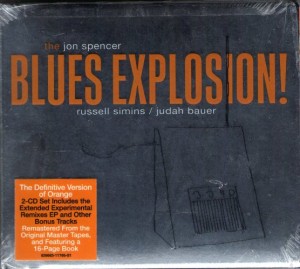
“Well, the most obvious one is on ‘Orange’. Fully Grown. Some people have criticised it as a horrible, filthy song, but I guess they were reacting to the lyric ‘Baby, baby, you wanna f**k me, don’t you?’ I’d like to say, ‘You guys have no idea.’ But Russell’s mum was very understanding, and when she first heard it she asked me, ‘Isn’t this your wife singing about?’ And I said, ‘Yes,’ and she said, ‘It’s a beautiful song.’ Hehe. See? It may not be a conventional love song, but if you know it, you know it. That’s the Blues Explosion style, and that’s my style.”
I had the chance to see your live performance on the first day in Tokyo (2/16) and it was incredibly exciting. How did it feel to be on stage?
“To be honest, I was scared. Right from the start, the crowd was so enthusiastic, I wondered, am I really that famous? I was worried that I would be overwhelmed by the crazy energy of the crowd. It felt like we were being carried away, when we were the ones who should be getting carried away. But as we went along, we started to communicate with the audience and it was all fine.”
So, it seemed like your playability had improved again.
“But you can’t just improve at guitar all at once. We’ve been on the road since the last time we came to Japan last month, so we’ve been getting better as a band. As a band, I think we’ve definitely become more cohesive. And our shows have gotten better as a result. Well, basically, we’ve just gotten better at hiding things.” There’s no need for such modesty (laughs).
“No, our playing ability still has a long way to go.
“Home” is where Jon Spencer can rest his wings. When I had a child, I thought back to my father and mother who raised me.
By the way, has having a family and having children changed the way you approach your musical activities? Taka: “Of course. As I said before, some of the songs on ‘ACME’ are about what I felt when I had a family. Having your own child is an intense experience that you don’t get very often in life. On the other hand, it would be strange for someone to not be affected by it. It would be strange for someone to not be affected by it. So, if you ask me what it means, I can only answer that it means everything. I will never forget them for a moment, they will always be by my side, and they will always be by my side, so I will continue to write songs about my wife and son from now on.
“There’s a possibility that I’ll write about it.” I’ve never felt anything like this before.
“It was an overwhelming feeling that completely overturned all common sense I had known up until then. I was even scared right up until the moment, but once I actually became a father, it was the first time I had ever felt such happiness. I experienced emotions and ways of looking at things that I had never even imagined before.
It’s full of reckless, crazy, unconventional energy, and I want everyone to experience the joy of rock and roll.”
What do you mean? I have experienced it. …It also makes me think about my relationship with my family back home, that is, my parents who raised me, and my siblings. Having my own family makes me wonder where I came from. But on the other hand, there are other things that are separate from that.”
“So, some people say that how can a rock ‘n’ roller who sings like a ‘worn man’ reconcile the contradiction of being a husband with children and who is expected to take on social responsibilities behind the scenes? (laughs) It’s a matter of separating the stage and the home as completely separate things. …Well, I don’t need to be a crazy rock ‘n’ roller 24/7 either. The two are completely different things, so I think that’s fine. …Well, what’s great is that rock ‘n’ roll has given some meaning to my empty life.
The second chapter of JSBX begins! With “Acme” and his own project 20 Miles, the pent-up blues spirit is finally revealed! The shy, pure, and sincere “third man,” Judah, takes on what he calls the longest interview of his life!
I wonder if it’s okay to get away with something like this. I’ve worked with RL (Burnside) and others. Compared to him, I’m still a rookie.”
Yes, yes. Watching you play, I thought to myself, your potential as a guitarist is the driving force that keeps a track like “Acme,” with its gentle groove, from becoming boring.
“Yes, it’s true that the role that falls on me has become bigger. But that’s because “ACME” is really
It just has to do with the fact that it was made in a mainstream way. It was the first time that each of us had our own unique style, so it was the beginning of our second chapter. Up until that point, everyone was just looking in one direction, but we’d already made so many albums in that style that when we made Acme, we had to be more democratic. The hip-hop style was Russell, the production style was Jon, and the country and blues kind of stuff was me.
I think that if we don’t each pour everything we have into our work, there’s no point in being a Blues Explosion anymore.”
I see. But the deep music like blues and country that formed the foundation of that work is clearly your style, isn’t it?
“Well, that’s true. I’m into retro or anachronistic things. And they’re into hip-hop and the Beastie Boys… so it was like they were sampling that kind of roots music. Right, I was the supporter of the band.
That work was ultimately the result of everyone’s efforts. “We couldn’t have shone as brilliantly as each of us individually.” That’s a bit of a problem when you say that (laughs). It’s also a bit of a problem (laughs) because I was thinking of talking mainly about 20 Miles today.
“Well, I take that back (laughs). I mean, I am who I am because of the Blues Explosion, and 20 Miles is because of that band. They’re both a part of me, so I don’t see it as a contradiction at all.”
So, what is the musical line between JSBX and 20 Miles? “One is a party band, and the other is a vehicle for songs. The former, Blues Explosion, is a band for partying as hard as you can. It’s a rock ‘n’ roll band that requires hot guitar playing, modeled after the Stones. In contrast, 20 Miles is more ambient, like Delta blues. It’s all about me singing. I’m not a rock singer after all. I sing in a more country style, in my case.”
So, 20 Miles is a way for you to release the expressive impulses that you can no longer contain with JSBX?
“…Is that so? (laughs) I haven’t really thought about it much, but there is certainly some truth to that.
Yes, I wanted to sing myself. When I was a kid, I wanted to be a songwriter, not a guitar player, but I didn’t think I could sing, and I was scared of singing. But as I watched the people around me, I realized that even a pretty sloppy song could work, so I wasn’t scared anymore, and I thought, “Well, I’ll give it a try myself!” (laughs)
So there’s no need to be embarrassed (laughs).
“(Laughs) Well, to begin with, I love music, so I wanted to keep doing it constantly. When I was with the Blues Explosion, it was my whole life, but when that ended, I had nothing left. So, in order to continue doing the music I love, I thought it would be best to do something like bluegrass or country, which don’t quite fit into the world of bands. I like researching different kinds of music, after all. I felt I had to be doing something. Come to think of it, I had bought a lot of new guitars, so it would be a waste not to use them. I thought I could just get more bands to use them. That was probably the real reason (Laughs).”
Seriously, you… Even 20 Miles has a sound that can be considered contemporary blues, so you should have more confidence. I mean, it’s about time you had more confidence. For example, Elvis Costello was the kind of guy who said, “True roots music is about people who actually work on farms and make music.” As someone who lives in New York and makes a living as a musician, what do you think about this opinion?
“Isn’t that a statement made out of guilt?” Yes, that’s true (laughs).
“It’s the way things are now, and I don’t think it’s any less realistic just because I don’t work on a farm.”
But you can understand what he’s trying to say. “Yeah, I get it. For farm workers, music isn’t something they decide in their heads, it’s something they need to get through the day. That’s why so many great things were born. But the point is, how pure can you be about that life?
I think that’s what it comes down to. In other words, it’s a matter of purity. Don’t turn your back on your current life, live it to the fullest, and then turn it into a song.”
I see. So, the content of the song in “Waga Kakuhosha Ya” is all about girls, like that cool girl he found on the street corner, right? So, does that mean it’s sung with the same feeling as blues used to take up the subject of very familiar sorrows?
“From a perspective, that’s 100% true. However, 20 Miles has just begun… It’s the very beginning of my career as a singer (laughs), but I’ll start with what I can do. It feels like that.”
But that directness is what makes it blues
Let’s just call it a humming joke (lol).”
“That’s true, but in reality, the song was made much earlier.
And then I’d say, “Oh no, I don’t have the lyrics yet,” and I’d just be writing them. I could only do it when Blues Explosion wasn’t active. I had no choice but to decide, “Okay, I’ll write it in an hour,” and then start writing. The really cool blues lyrics are the ones that have a really dark feel and sing about the soul, but if I did that now it would sound too forced, so I think the blues that I write expresses who I am now, including the realistic aspects of my limitations.” So, in that sense, are there any artists from the younger generation that you can relate to?
“Bob Log III is great. I loved Doo Rag, and I like what he’s doing now too. Above all, his live shows are amazing. He’s opened for us a few times, and he’s eccentric and great. I can’t do anything like that. We’re both on Fat Possum, so we’re both oddballs on the label, but what I relate to most is that we’ve both listened to the same kind of blues, and we both try to incorporate that into our own music. Well, in his case, it’s his eccentric character that counts. He’s really crazy.”
That’s true. And compared to him, the album title “I’M A LUCKY GUY” seems like a phrase that symbolizes you.
“Hmmm…no. I’d like to say I’m an unlucky guy (laughs), but I suppose I am actually one of the lucky ones. But I don’t like the word lucky because I think who I am today is the result of a fair amount of hard work and perseverance. But, for someone who has fallen in love with the blues, meeting R.L. Burnside, for example, is the best kind of luck you could ask for. So yeah, I guess the title lucky guy suits me now.”
What do you mean by unlucky? What do you mean by lucky? “Especially when I was a kid, before I moved to New York… I was a pretty self-destructive, dark kid (wry smile). I wouldn’t say I was lucky back then. But they say if something tries to kill you and you don’t die, it makes you stronger… I still think about it often, but I’m not in a position to tell anyone yet…”
Regardless of the specific facts, is your attraction to Delta Blues also a reflection of your lifestyle?
“Yeah. Maybe it’s because I’m a gloomy person? I was born with it. For some reason, it just feels right. When I listen to that kind of music, my nerves go numb and I can’t think. Especially Delta blues. There’s no music more sincere than that… and I want to be sincere in my music too. That’s why I play my own kind of blues. It’s true that there are some differences from the original, but as a white guy living in New York in the ’90s, I just wanted to pursue how close I could get to the essence of it.
My life has no value.” Thank you. That’s the one thing I wanted to hear.
“Yeah, really, but this is the first time I’ve ever talked about myself at such length. Are you guys trying to write my autobiography or something? (laughs)”
(laughs) Jon was in the next room being interviewed for the same amount of time.
“That’s why I’m so scared. If this gets featured in a half-page article, I’ll definitely kill you the next time you come to Japan! (laughs)”
Haa……”