| 21 March 2005 | Manteca | MANTDCD235 |
| Disc One: 01. Mose Vinson – Same Thing On My Mind 02. Rosco Gordon – T Model Boogie 03. Billy Lee Riley & The Little Green Men – Red Hot 04. The Mar-Keys – Last Night 05. Alex Chilton – Hook Or Crook 06. The Jon Spencer Blues Explosion – Chicken Dog 07. Gus Cannon (Banjo Joe) – Poor Boy Long Ways From Home 08. North Mississippi Allstars – Snake Drive 09. Mud Boy and the Neutrons – Slummer D Slum 10./11. Elder Beck – Rock And Roll Sermon (Parts 1 & 2) 12. The Jesters – Cadillac Man 13. Million Dollar Quartet – I Shall Not Be Moved 14. Jessie Mae Hemphill – Go Back To Your Used To Be 15. Eddie Floyd – Things Get Better 16. Sly Johnson – Anyway The Wind Blows 17. Ann Peebles – (I Feel Like) Breaking Up Somebody’s Home 18. Tav Falco’s Panther Burns – Tina, The Go Go Queen 19. Sid Selvidge – The Outlaw 20. Isaac Hayes – By The Time I Get To Phoenix Disc Two: |

|
| VIEW: | |
| NOTES: | |
| Double CD with card slip-case and detailed 12 page booklet.
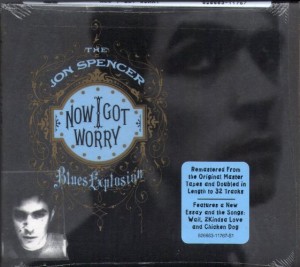
Includes Chicken Dog featuring Rufus Thomas from the Jon Spencer Blues Explosion album Now I Got Worry. And the North Mississippi Allstars cover of Snake Drive by R.L. Burnside which was The Jon Spencer Blues Explosion recorded with R.L. Burnside for A Ass Pocket of Whiskey. |
|
| SONG CREDITS: | |
|
Produced by Robert Gordon. The concept has been devised by the Barbican Centre in association with Robert Gordon. 1.1. Mose Vinson – Same Thing On My Mind 1.2. Rosco Gordon – T Model Boogie 1.3. Billy Lee Riley & The Little Green Men – Red Hot 1.4. The Mar-Keys – Last Night 1.5. Alex Chilton – Hook Or Crook 1.6. The Jon Spencer Blues Explosion – Chicken Dog 1.7. Gus Cannon (Banjo Joe) – Poor Boy Long Ways From Home 1.8. North Mississippi Allstars – Snake Drive 1.9. Mud Boy and the Neutrons – Slummer D Slum 1.10./1.11. Elder Beck – Rock And Roll Sermon (Parts 1 & 2) 1.12. The Jesters – Cadillac Man 1.13. Million Dollar Quartet – I Shall Not Be Moved 1.14. Jessie Mae Hemphill – Go Back To Your Used To Be 1.15. Eddie Floyd – Things Get Better 1.16. Sly Johnson – Anyway The Wind Blows 1.17. Ann Peebles – (I Feel Like) Breaking Up Somebody’s Home 1.18. Tav Falco’s Panther Burns – Tina, The Go Go Queen 1.19. Sid Selvidge – The Outlaw 1.20. Isaac Hayes – By The Time I Get To Phoenix 2.1. Booker T & The MG’s – My Sweet Potato 2.2. Jim Dickinson – Down In Mississippi 2.3. Johnny Woods – Jes’ Like A Monkey 2.4. The Bo-Keys – Spanish Delight 2.5. Howlin’ Wolf – Howlin’ Wolf Boogie 2.6. Jerry Lee Lewis – Hand Me Down My Walking Cane 2.7. The Country Rockers – Image Of Me 2.8. The Merits – Please, Please Little Girl 2.9. Big Star – September Gurls 2.10. Memphis Jug Band – Whitewash Station Blues 2.11. Travis Wammack – Scratchy 2.12. Sonny Burgess – Red Headed Woman 2.13. Tearjerkers – White Lie, Black Eye 2.14. Reigning Sound – If You Can’t Give Me Everything 2.15. William Bell – You Don’t Miss Your Water 2.16. Donnie Fritts with Lucinda Williams – Breakfast in Bed 2.17. Country Soul Revue feat. George Soule – I’m Only Human 2.18. Al Green – Simply Beautiful 2.19. Bobby Rush – Sue |
|
| SLEEVE NOTES / INFORMATION: | |
|
“Long known as the place from where Elvis Presley – and with him rock ‘n’ roll – burst into our lives, this fact is only part of the story.
From way back when to way ahead now, these two CD’s join all the dots and fill in all the blanks. An absolutely essential guide to one of the most important musical cities in America, a city that has helped changed the face of popular music. Memphis music combines the familiar with the unexpected, playing just enough behind the beat to make you wonder if it won’t all just fall apart in the next measure. The story of this collection, and of all Memphis music in a way, is revealed in the first few tracks of CD1. In a barrelhouse beer joint on Beale Street, not too long after World War 1, Mose Vinson—who lived to see the 21st century dawn—was sweeping sawdust, chaw tobacco, and tamale* wrappers off a wood slat floor. He learned to make the piano highstep from the older men who were paid to keep the customers smiling while waiting their turn at a young woman’s attention in the back rooms. Mose had fingers like a broomstick making him well suited to both jobs, one or the other keeping him gainfully employed until his final days. After a career that included cleaning Sun Studio for Sam Phillips, Mose found himself back on Beale Street, perched in a display window at the Center for Southern Folklore, an authentic, big-hearted artifact, singing Same Thing On My Mind. Mose’s piano style was picked up by younger kids like Rosco Gordon. A Memphis boy raised around Beale, he had a unique rhythm and a great sense of time which he makes plainly evident in his delivery of T-Model Boogie. That sound was soon broadcast into the night on stations like Memphis’s WDIA (the US’s first with an all-black disc jockey staff), KFFA (broadcasting the sound of the Mississippi Delta right back to itself), and by WHBQ disc jockey Dewey Phillips, the white madman of the Memphis night and the very crux of Memphis music. In Newport, Arkansas, about 125 miles from Memphis, kids like Billy Lee Riley and Sonny Burgess heard blues in the fields, in the wind, and on the radio. A natural part of their environment, it suffused itself with their country music and white church influence, creating a new sound altogether, the one that came to be called ‘rock and roll’. Riley and Burgess followed the sound to Memphis, to Sun Records, where producers Sam Phillips and Jack Clement embraced the burgeoning style, inscribing into history Riley’s Red Hot and, here on CD2, Burgess’s Red Headed Woman. While rock and roll exploded, the white kids in the Mar-Keys kept their eye on the boogie, leaning against the stage, staring wide-eyed, pie-eyed, one-eye-covered at beautifully rhythmic bands led by Willie Mitchell, by Phineas Newborn Sr., and Bowlegs Miller. The Mar-Keys had way more enthusiasm than know-how and consequently most were not allowed to play on Last Night. However all went on to become accomplished players, proving again and again to skeptical club owners that this scraggly band of young white kids was indeed the act they’d booked. (The story of the band warrants a whole chapter in the book It Came From Memphis.) The band ultimately morphed into Booker T. and the MG’s, the house band at Stax. That frat-house meets cathouse sound continued to gurgle at the center of the Memphis volcano. By the latter half of the 1970s, Memphian Alex Chilton—who’d had pop hits with the Box Tops, then pop misses with Big Star—embraced the punk ethos burgeoning in New York and stepped into the post-Sun Records Sam Phillips Recording Service with the members of Mud Boy and the Neutrons. Here he took back rock and roll, rescued it from the hairstylists and the drum solo artists who’d kidnapped its soul. The music needing a thrashing and these guys did it with glee. Hook or Crook is from Chilton’s symphonic, maligned, misunderstood album Like Flies on Sherbert. And however successful the bowdlerizing of the beast was, rock and roll survived and continued to be exported from Memphis where it had begun: absorbed, consumed, shat out (or, as my friend Jim Dickinson likes to say: co-opted, pre-empted, recycled) only to be consumed again. Chilton’s gloriousness was reconstructed by people like Jon Spencer’s Blues Explosion in New York, resulting in a new sound that carried the music a step further and, in the case of Chicken Dog, also slung it all the way back to the beginning, with Rufus Thomas reciting the nursery rhymes he’d learned while hearing people like Mose Vinson beat the piano to pieces. Rufus found in Spencer’s wall of sound the perfect door through it—“I know where I’m going now,” he says—creating space where there was none, and suddenly that sound of Mose Vinson has come full circle until it is unrecognizable yet fully the logical extension of its original idea. (Dig, too, the way the break evolves—the sound of the band not playing—through these last 3 songs.) The sequencing of these discs is inspired by how Dewey Phillips programmed his radio show: the songs are linked by spirit, by feel; not genre, chronology, or other time/space restrictions. Making decades and technology melt away like hot butter, Gus Cannon’s hip—and hit—jug band sound takes us mellifluously to 1927 and Poor Boy A Long Ways From Home. The North Mississippi All Stars yanks us back to the present with their treatment of RL Burnside’s hill country classic Snake Drive, juicing it with 21st century Mississippi basement grunge. Blocks off the ole chip, Mud Boy and the Neutrons take on the Five Royale’s Slummer D Slum. This was recorded in a Beale Street studio on the site where P-Wee’s saloon, a favorite watering hole of both Gus Cannon and Mose Vinson, stood. The Five Royales were who the Mar-Keys wanted to be, and to some extent who Mud Boy emulated, another nexus on the blues/rock/soul crash pad. Elder Beck’s association with Memphis is largely spiritual. Often considered a direct influence on Elvis Presley, Beck’s “Jesus, I Love You” sounds like something Elvis might be trying to emulate when he sings ballads. Here is Beck, circa 1956, railing against the sins of his children—rock and roll—accompanied by a really rocking guitar which, working with the Elder’s rile ’em up vocal style, has pitched his congregation into a rock and roll fever. A decade later, the congregation proved still attentive when the Jesters, a Memphis band featuring Sam Phillips’s son Jerry (AKA The World’s Most Perfectly Formed Midget Wrestler) recruited Jim Dickinson (a member of Mud Boy and the Neutrons and producer of several tracks on this collection) to pound the keys and sing on Cadillac Man, probably Sun’s last great rock and roll record. I Shall Not Be Moved is the Million Dollar Quartet—Presley, Carl Perkins, Jerry Lee Lewis and Johnny Cash—each from different parts of the south, finding common ground in the gospel music of their youth. A little known MDQ story: Jack Clement, the first person Sam trusted to produce Sun records (see my documentary on Jack, “Shakespeare Was A Big George Jones Fan” for more info)—was in the control room as the quartet accidentally assembled and he remembers standing, announcing to no one in particular, to the world at large, “I believe I would be remiss if I did not record this.” Thank you, Jack. Jessie Mae Hemphill ain’t studying no rock and roll. Her dad was Sid Hemphill, the Mississippi hill country fife player whose legendary mid-20th century picnics and frolics drew the attention of traveling folklorists like John Work and Alan Lomax. She delivers a spell-casting blues with Go Back To Your Used To Be. The soul portion of this disc begins with a lesser-known Eddie Floyd track, Things Get Better. The opening build is equal parts rock and roll and soul, presaging his later hit “Big Bird.” The classic Stax horns give the verses lift, the choruses dynamics, and take the bridge all for themselves. Hi Studio, a mile away from Stax, was a soul sound altogether different—even though many of the same players made the music. Anyway the Wind Blows and (I Feel Like) Breaking Up Somebody’s Home are from 1972, when Stax was releasing the Dramatics “In The Rain” and the Staple Singers’ “I’ll Take You There.” These Hi tracks, and most all Hi tracks, are suffused with the sense of producer Willie Mitchell, an urban sophisticate reared in the Mississippi hills. A student of the Schillinger system, Mitchell—and his brother James, who arranged horns and strings—imbued a slick sultriness to everything on the label. Tina, The Go-Go Queen is an unrecorded Stax gem resurrected by tone scientist Tav Falco, who founded His Unapproachable Panther Burns during the late 1970s Memphis music vacuum. This unblinking full soul paean features trumpeter Ben Cauley—the sole survivor of the Otis Redding plane crash—and Memphis sax star Andrew Love. Sid Selvidge’s The Outlaw, from his 1976 Cold of the Morning album, hearkens to the Memphis coffee house days of the early 1960s. Possessed of a voice rich and beautiful, Selvidge’s composition is all about the opportunity to yodel. With By The Time I Get to Phoenix, we are invited to the birthing room of modern black music. In 1969, not too long after Otis Redding’s death, Isaac Hayes was invited to make an album for Stax, where he was a producer and songwriter. It was still a singles world, especially in the African-American market, so an 18-minute track was truly done with no notions toward sales. Hayes, always an artistic free spirit—his roots are in the Grand Ole Opry—had a keen ear for pop and was entranced by this Jimmy Webb song. Friendly with the Bar-Kays, Hayes dropped by their club gig to test it. The long intro was how he shifted the audience’s attention from their conversations to his. Toward the song’s end, when the protagonist accepts his fate and states, “I got to go on,” the horns break like sunshine through the clouds. It’s masterful arranging and early evidence of the great work that would come from this star on the rise. CD2 opens with a 1966 Booker T. and the MG’s track that features piano instead of organ. My Sweet Potato, from the And Now! album, is about timing, about the pocket—that place in the song where the beat settles snugly—and how the various instruments work to give that pocket dimension. With backing from his kids, the North Mississippi All Stars, Jim Dickinson resurrects a chilling J. B. Lenoir blues track about racism, Down in Mississippi. “They have a hunting season on the rabbit,” he sings, “If you shoot him, boy, you go to jail/But the season is always open on men/Don’t nobody need no bail/Down in Mississippi.” Johnny Woods was the Mississippi hill country shaman. When Mud Boy were really jelling, Johnny Woods would appear, harmonica in hand, ready to call up from the grave his old playing partner, Fred McDowell. Jes’ Like A Monkey captures Johnny at his most intimate, harmonica and soul as one. The Bo-Keys are one answer to the question: “What happened to the great session musicians when the soul studios went away?” Featuring former Stax members on drums (Willie Hall), organ (Ronnie Williams), and guitar (Skip Pitts played the wah-wah sound on “Shaft”) and joined by others who cut their teeth listening to Stax, the Bo-Keys are an interracial, cross-generational good thing happening today. Howlin’ Wolf Boogie: Though Howlin’ Wolf is closely associated with Chicago blues, he is the ideal reminder that Chicago’s musical roots are downriver in Memphis and the delta. Even Wolf’s earliest Chess hits (a Chicago label) were cut in Memphis, and at Sun Records no less. Wolf, Sam Phillips often said, was his greatest discovery. Hand Me Down My Walking Cane is part of what poured out of Jerry Lee Lewis during his first visits to Sun Records. This tune, from early 1957, features Roland Janes on guitar. If Lewis’s style is a spicy gumbo, Janes is that flavourful rice that makes the dish a meal. His easy sound is in contrast to Jerry Lee’s pumping piano, creating a whole that’s more than the sum of its parts. One of the most overlooked influences on Memphis music is the sound of the country roadhouse. Essentially the white equivalent of the juke joint, these places were strong musical incubators; country sounds, but distilled with the blues to influence their delivery and rhythm, as in The Image of Me. The Country Rockers, put together by sometime Panther Burn and Alex Chilton sideman Ron Easley, kept alive a tradition they knew firsthand, expounding upon it in Memphis punk clubs and to a few lucky souls in Switzerland and Germany. Please, Please Little Girl has a pretty funky beat for some college kids from Jackson, Tennessee. Recorded in the wake of I Want to Hold Your Hand, they were ahead of the pack in foraging for sounds. This is from the second volume of A History of Garage and Frat Bands in Memphis. About a decade later, when progressive rock was making music hard to take, Alex Chilton’s Big Star rebelled beautifully and with lasting grace. Reaching back to the Beatles pure-pop sound, they infused it with some solid state 1970s power to create Big Star’s shining moment, September Gurls. From one great pop song to another, we trip back fifty years to the Memphis Jug Band, the most popular of the genre, playing one of their most optimistic songs, White Wash Station. See the CD It Came From Memphis Vol. 2 on Birdman records for more from sometime member Robert Burse. Travis Wammack’s Scratchy is the pride of Sonic Studios, the mighty institution founded by Roland Janes (heard earlier playing the guitar solo with Jerry Lee). A mere 17 years old at the time of this recording, Wammack (and Janes) exhibit soul, precision, and great humour. Plenty of good humour around Sun Records. The trumpet on Red Headed Woman blows eight notes at the song’s start, then hides like a rattlesnake while Sonny Burgess works himself out of his skin, returning to push the song’s close over the top. White Lies is the fully mutated Sun sound, shipped off to Richard Hell’s 1970s New York and then brought back home again. The Tearjerkers are led by Jack Yarber, who with Greg Cartwright made up two-thirds of the Oblivians, a notable Memphis garage export of the 1990s. Cartwright weighs in with the ballad version of Nothing At All from his latest group, the Reigning Sound. It’s kind of amazing how easily it bleeds into a song 40 years its senior; William Bell’s You Don’t Miss Your Water, covered by Gram Parsons among many. The exchange of ideas between Memphis and Muscle Shoals really warrants a full CD to itself, but here’re a couple of thoughts on the subject. Songwriter Donnie Fritts, the Alabama Leaning Man, tends to keep to the shadow at the heart of Muscle Shoals, but steps forward occasionally to sing lead and score the chicks. He snares Lucinda Williams for this version of Breakfast in Bed, the oft-covered classic he co-wrote with Eddie Hinton. George Soule’s soulful voice is best known for a 1973 African-American message song, “Get Involved.” He passed for black on record, but turned down invitations for promotional TV appearances. I’m Only Human could be an answer song to that situation. The Hi Rhythm guys are masters of restraint, able to create a full and rich sound by laying back. And Al Green may never lay back any further than he does on Simply Beautiful, a track guaranteed to make your baby lay back. Bobby Rush – the Jackson, Mississippi soul blues star – has a different technique for laying Sue. Rush, who starred in The Road to Memphis documentary, keeps the blues popular among the African-American audience and has long deserved wider attention. Crossover success for him would be completing a circle begun on Beale, way back when Mose Vinson and the Memphis Jug Band were making white people curious about what exactly was going on inside those sawdust and chalk barrelhouse clubs. Robert Gordon is the author of It Came From Memphis (Secker and Warburg), and producer of two other CD collections also entitled It Came From Memphis, on Rounder and Birdman Records. Recommended Reading: * tamales – a mexican food, pork or beef within a corn meal coating, wrapped in corn husks and boiled. The corn husks are dispensed with.” Diner front cover photo courtesy of Miles Evans of the Barbican. REAR: “12 page booklet includes introduction to the music and information on all artists and tracks. Produced by Robert Gordon author of It Came From Memphis (Secker and Warburg). These 2 CDs include artists featured at the Barbican’s It Came From Memphis festival in April 2005. The concept has been devised by the Barbican Centre in association with Robert Gordon. www.unionsquaremusic.co.uk See inside for licensing credits. this compilation (p) 2005 Union Square Music Ltd. Manteca is a Union Square Music Ltd. label. Union Square Music Ltd. Unit 1.1. Shepherds Studios, Rockley Road, London, W14 0DA, UK.” DISCS: Memphis, CD1/CD2, It Came From Memphis, Mantcea, MCPS, This compilation (p) 2005 Union Sqaure Music Ltd. © 2005 Union Sqaure Music Ltd. All rights of the producer and the owner of the recorded work reserved. Unauthorised copying, hiring, renting, public performance and broadcasting of this recording prohibited. MANTDCD235. Manufactured in the EU. |
|
| DETAILS: | |
|
ARTWORK: Diner front cover photo courtesy of Miles Evans of the Barbican. All other photography courtesy of Janfranco Caro at Mystery Design BARCODE: 6 98458 22352 4 MATRIX: |
|